


Published in Emerging Infectious Diseases, a research letter describes the first detection of Seneca Valley virus (SVV) in England, with cases identified across five outdoor pig farms between June and September 2022.
The work was a collaboration between The Pirbright Institute and the Animal and Plant Health Agency (APHA), with support from the National Centre for Foreign Animal Disease in Canada.
Farm staff called their private veterinarians after observing clinical signs in sows, which included lameness, reluctance to move, and lesions on the snout and feet. As these signs resembled notifiable vesicular diseases such as foot-and-mouth disease (FMD), their vets promptly informed APHA and the premises were restricted while official investigations were undertaken.
The samples collected tested negative for notifiable diseases. Further laboratory analysis, including virus isolation and RT-PCR testing, confirmed the presence of Seneca Valley virus, which had never been identified in UK pigs.
“Due to the similarity of SVV infection with other notifiable diseases such as FMD, it was important that notifiable diseases were ruled out quickly. The Vesicular Disease Reference Laboratory and APHA had already identified SVV as a potential threat and had developed diagnostic tests which allowed rapid identification of the virus,” said Dr Bryony Armson, Postdoctoral Scientist at The Pirbright Institute.
Additional cases were subsequently identified across four other farms. While clinical signs occurred in adult breeding sows exclusively, viral RNA was also detected in pigs without visible clinical signs, and in samples collected from their environment, including pen walls, feeders and equipment.
Genomic sequencing showed that the Seneca Valley viruses identified in pigs in England in 2022 shared a common ancestor with a virus that had circulated in the United States in 2020. The sequences clustered into two closely related groups, suggesting either a single introduction followed by spread between farms, or multiple introductions.
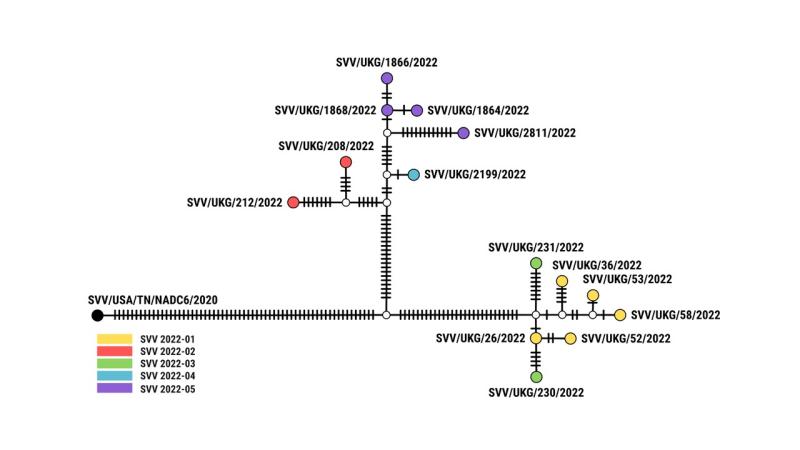
No further clinical cases have been reported in England since September 2022. By providing the first detailed account of SVV-associated disease in England, the research strengthens understanding of emerging livestock viruses and supports ongoing efforts to protect animal health in the UK.
Dr Susanna Williamson, APHA, said:
“A key message to pig keepers and vets is that they must report any clinical signs of vesicular disease promptly to enable notifiable diseases to be ruled out through testing. Pig keepers should inspect their pigs at least once a day (while they are moving about) and be vigilant for lameness and lesions on the feet, snout or mouth. It is vital that any sign or suspicion of vesicular disease in pigs is reported immediately to APHA for official investigation to rule out notifiable disease.”
Key facts about SVV can be found here. It remains unclear how SVV enters the pig population in new countries and naïve herds. Therefore, the stringent application of well-established biosecurity practices is essential. This will also help reduce the risk of introducing other exotic diseases such as African swine fever, as well as endemic diseases like Porcine Reproductive and Respiratory Syndrome.
If you would like to read the full research letter, click here.