


Recently, scientists from The Pirbright Institute joined collaborators at the Roslin Institute in Edinburgh to launch the next phase of the Livestock Antibody Hub, following a second five-year funding award from the Gates Foundation.
Building on the success of the original programme, the renewed investment will enable the Hub to continue advancing livestock antibody science to support the development of next-generation vaccines and diagnostics for livestock diseases. By improving understanding of B cells and antibody responses, the Hub aims to provide researchers and vaccine developers with the specialist expertise, tools and technologies needed to accelerate innovation and improve livestock health worldwide.
The launch meeting brought together researchers and stakeholders from across the partnership to review the achievements of Hub 1.0 and establish priorities for the next five years.
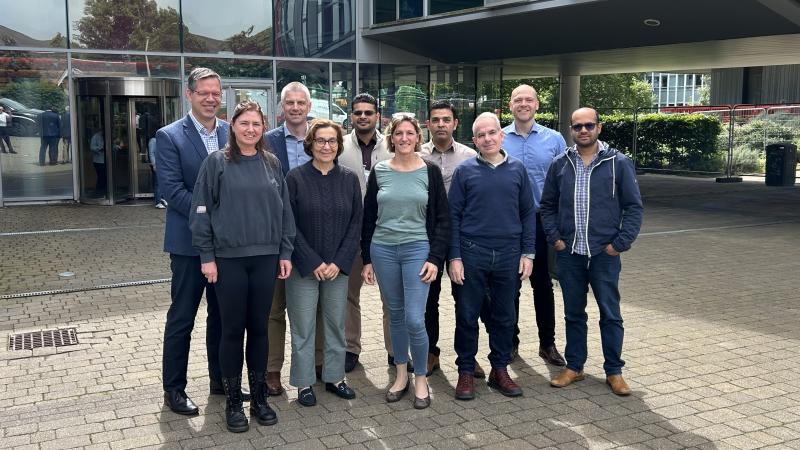
Opening the meeting, Professor John Hammond, Director of the Roslin Institute, introduced the vision and objectives for Hub 2.0 and reflected on the achievements of the programme's first phase. Nick Juleff, Deputy Director at the Gates Foundation, then outlined the Foundation's current priorities and strategic direction. Scientific presentations from Hub partners showcased the breadth of research being supported through the programme before discussions turned to project delivery, collaboration and priorities for the next stage.
Looking ahead to the future of the Hub, Professor Hammond said:
"The Hub will continue to act as a source of trusted expertise and capabilities for the study of antibodies in a range of livestock species. As such, existing and new projects will continue to be supported across the UK and around the world, aiming to develop and improve vaccines and diagnostics to a range of critical diseases."
This ambition was reflected in the research presented by Pirbright scientists at the meeting, which spanned vaccine development, veterinary immunology and enabling technologies. Presentations included the development of an mRNA vaccine to induce a cross-protective, long-lasting immune response against foot-and-mouth disease virus; the use of pigs as a translational model for mucosal immunity and respiratory therapeutics; bioinformatics capabilities; the generation of cattle anti-Bm86 antibodies to support the identification of protective epitopes; advances in the Immunological Toolbox for veterinary research; and research identifying key antigens involved in the humoral immune response to bovine tuberculosis.
Among the researchers presenting at the meeting was Dr Marie Di Placido, B Cell Dynamics Group Leader at The Pirbright Institute and lead of the Hub work package focused on improving foot-and-mouth disease vaccines. Her presentation focused on developing an mRNA vaccine to induce a cross-protective and long-lasting immune response against foot-and-mouth disease virus.
Reflecting on the opportunities presented by Hub 2.0, Dr Di Placido said:
"What is particularly exciting about Hub 2.0 is its focus on translating the fundamental discoveries made through Hub 1.0 into practical solutions that improve livestock health."
The Livestock Antibody Hub brings together research expertise to address the growing need for specialist capabilities that support livestock immunology and vaccine development. By enabling more informed vaccine design and advancing new approaches to disease prevention and treatment, the Hub aims to improve animal health and welfare, strengthen food security, and support more resilient farming systems. The programme will also benefit smallholder farmers who depend on healthy livestock for their livelihoods.
Highlighting the wider impact of the programme, Michelle Thom, a senior researcher in the B Cell Dynamics Group at The Pirbright Institute, said:
"By advancing our understanding of antibody responses and developing the tools needed to support vaccine research, the Hub will help accelerate the development of next-generation vaccines and diagnostics that improve livestock health and deliver tangible benefits for farmers and livestock communities around the world."
The meeting marked the beginning of the next chapter of the Livestock Antibody Hub, reinforcing the partnership's shared commitment to developing innovative solutions that address some of the most significant challenges facing livestock health.