


Resource provides one of world’s largest curated collections of immune reagents.

The Immunological Toolbox, a central research resource offering access to information on more than 20,000 immune reagents, is relaunched today on a brand-new website.
The community-driven platform - www.immunologicaltoolbox.co.uk - brings together one of the world’s largest curated collections of information on reagents and supports research and collaborations across 81 countries.
Backed by funding from UK Research and Innovation’s Biotechnology and Biological Sciences Research Council (BBSRC), the newly designed Toolbox connects researchers to a wider network of veterinary reagents and services, including those held at The Pirbright Institute and the Roslin Institute.
Immune reagents are vital tools to study cells and their response under various conditions, including vaccination or infection, as well as identify pathogens. The reagents are used in laboratory assays to detect, measure, or trigger specific immune responses, and include antibodies, antigens, and cytokines.
The fully revamped website delivers a modernised interface to the broader UK Immunological Toolbox project, opening up both the Pirbright and Roslin Toolboxes through a single route. It is also accessible to researchers across the globe.
New features include expanded documentation, a FAQ section, and compliance resources. An improved news interface together with streamlined antibody submission and request processes are now built into a more robust and scalable platform.
Dr Danish Munir, Head of the Immunological Toolbox, said:
“The Toolbox exists to jointly connect, contribute, and accelerate scientific progress. We welcome all reagents, new or existing, commercial or custom, with diversity strengthening the resource for everyone. By openly sharing data, successes, challenges, and innovations, we can address gaps in veterinary reagents more effectively than any single group could alone.”
Professor Jayne Hope, project lead at the Roslin Institute, said: ‘The Immunological Toolbox is a vital resource for the veterinary immunology community, supporting the sharing of reagents, methods and expertise. By providing an accessible hub where researchers can find information on immunological tools across a wide range of species and applications, the website plays an important role in coordinating veterinary immunology research.’
Professor Dan Horton, Director of Science at the Pirbright Institute, said:
“The launch of the new Immunological Toolbox website builds on one of the world’s largest collections of non-commercial immune reagents accessible to researchers. The repository supports the development of novel tools and high-resolution assays for studying complex immune responses.”
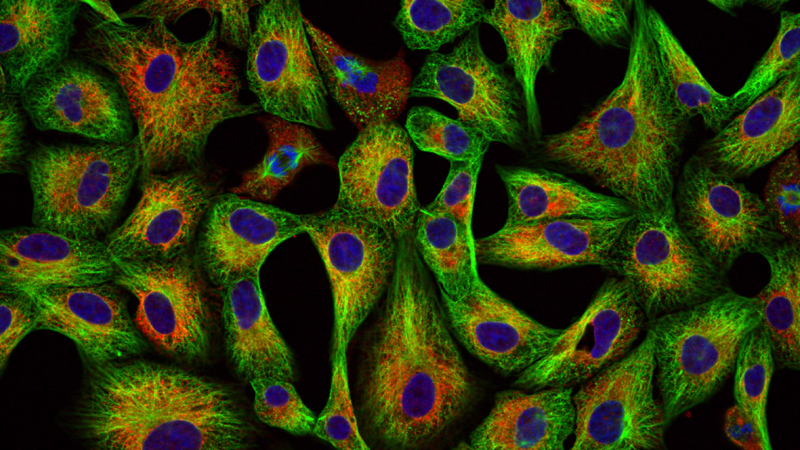
The platform has already contributed to several global vaccine development campaigns and to international initiatives such as the Livestock Antibody Hub and the Swine Toolkit, advancing immunology research in animals.
Professor John Hammond, Director of the Roslin Institute, said:
“The Toolbox offers enormous future benefits to veterinary immunology. Its development will strengthen community engagement through enhanced user profiles and contribution tracking, alongside the integration of automated tools to capture and link new research outputs and reagents.”
The platform will support a community of more than 1,000 researchers worldwide.
Dr Crystal Loving, U.S. Department of Agriculture, who sits on the Toolbox website steering committee, said: “I’m delighted to support the advances made to the platform which position the Toolbox as a more powerful, scalable and community-driven resource for global veterinary immunology research. It provides rapid access to information to advance animal health research programs”
Researchers using the platform have already demonstrated its real-world value to veterinary science. At LMU Munich, Dr. Sonja Härtle drew on Toolbox reagents to inform her study: "Delineation of chicken immune markers in the era of omics and multicolor flow cytometry". At Pirbright, Professor Elma Tchilian used the resource to support her work on "Fc-Mediated Functions of Porcine IgG Subclasses" which showed pigs are a valid model for the study zoonotic diseases.
Returning or new Toolbox users with suggestions for the site are welcome to get in touch by emailing Immunological.Toolbox@pirbright.ac.uk