


The Pirbright Institute, BioPREVAIL and WOAH join forces with Morocco’s National Office for Food Safety to strengthen diagnostic laboratory in Morocco.
Specialists from The Pirbright Institute are supporting plans to adapt part of an existing diagnostic laboratory in Morocco for high-containment work, as part of an international collaboration to strengthen animal health and disease preparedness in the region.
The project brings together Morocco’s National Office for Food Safety (ONSSA), the World Organisation for Animal Health (WOAH), The Pirbright Institute and BioPREVAIL to shape the next stage of development of ONSSA’s Casablanca Regional Laboratory for Analysis and Research. It is led by BioPREVAIL, an initiative hosted by the Global Health Security Fund in Geneva, with support from Global Affairs Canada’s Weapons Threat Reduction Program.
The project will deliver a validated design package tailored to the laboratory’s local needs and operating conditions, helping to ensure the laboratory is resilient, sustainable and equipped to meet future challenges. Work began in September 2026 and is expected to conclude in January 2027.
Diagnostic laboratories play a vital role in detecting and responding to diseases affecting animals, food systems and people before they become widespread outbreaks. However, facilities are often designed without fully considering local requirements such as workflows, infrastructure limitations and long-term maintenance needs. When these factors are overlooked, laboratories can become more difficult and costly to operate safely.
To address this, the project is using BioPREVAIL's Participatory Laboratory Design Methodology, which places laboratory users at the centre of the design process. The approach gathers evidence from day-to-day operations and translates these findings into practical design requirements for architects and engineers.
Experts from Pirbright are part of the project's Technical Experts Group alongside WOAH. During the current operational and technical diagnostic phase, they have worked with ONSSA colleagues in Casablanca to observe laboratory activities, map workflows from sample arrival to waste disposal and identify operational challenges. Their findings will help shape the design recommendations developed over the coming months.
Dr Lisa McDonald, President of the Board of Directors of the Global Health Security Fund, said:
"Good laboratory design starts with how a laboratory actually works, not with how we imagine it works. In Casablanca, we are building that evidence first, together with the people who run the laboratory every day. Our participatory methodology works best when different kinds of expertise come together: ONSSA's knowledge of its own laboratory, WOAH's international standards and The Pirbright Institute's experience in high-containment science. This partnership brings exactly that."
The project aims to establish a Biosafety Level 3 (BSL-3) diagnostic facility capable of supporting Morocco's long-term animal health surveillance and disease response efforts. Through its expertise in high-containment laboratories, animal disease diagnostics and international capacity strengthening, Pirbright is helping ensure the facility is designed to meet both current and future needs.
Dr Carrie Batten, Head of the Non-Vesicular Reference Laboratory (NVRL) at Pirbright, said:
"This collaboration reflects the importance of international partnerships in strengthening diagnostic capacity and improving preparedness for animal disease outbreaks, which can have significant impacts on food security, livelihoods and global health in North Africa and Europe."
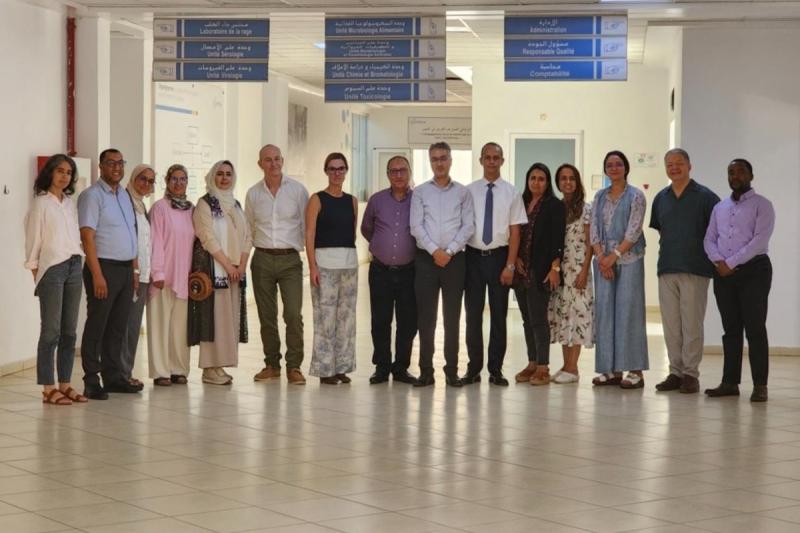
Representatives from Pirbright recently joined project partners in Casablanca for the launch of the programme and an opening workshop with laboratory staff, marking the start of a collaborative effort to support Morocco's future animal health and disease surveillance capabilities.